 Lavanis
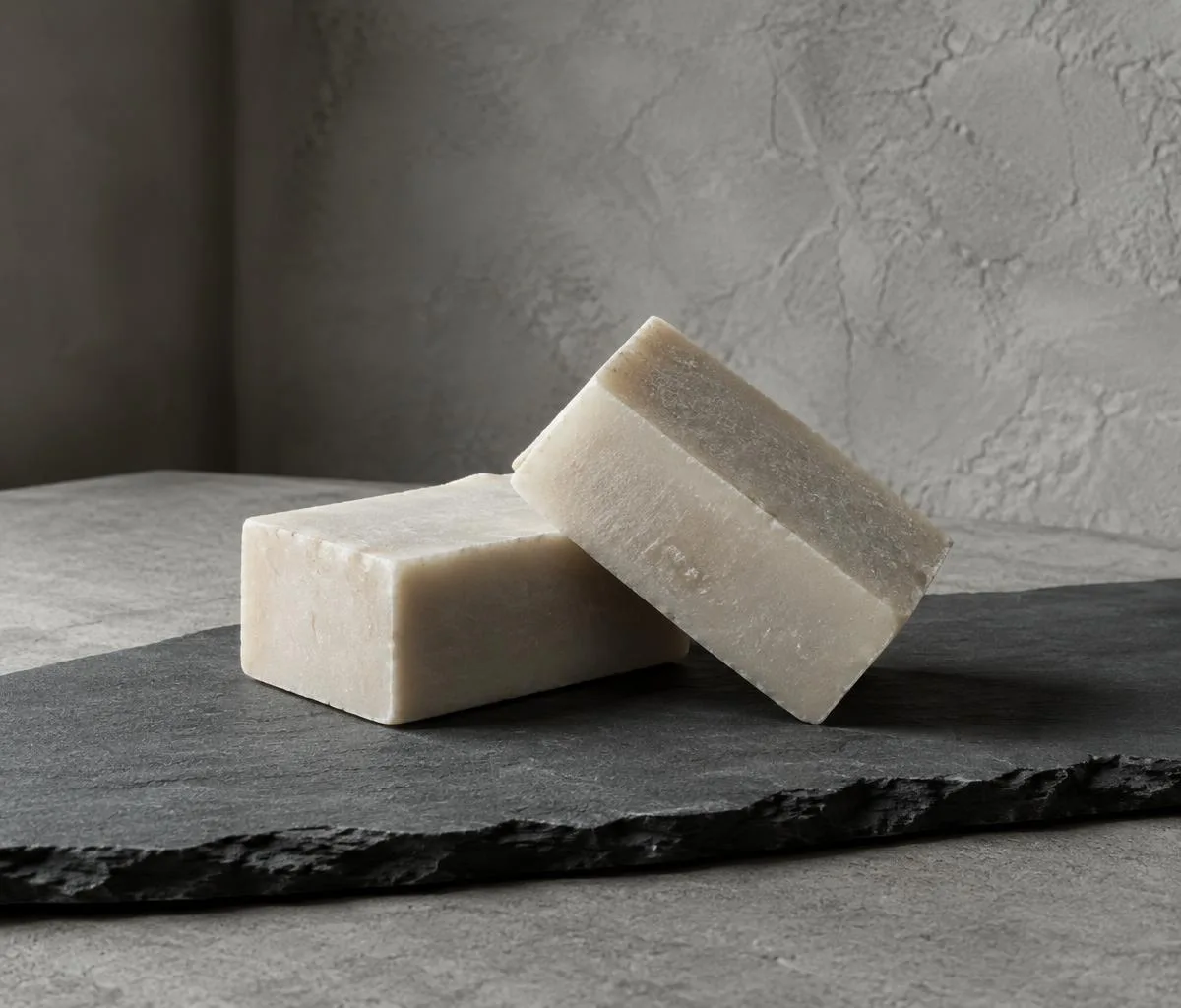
You will learn the biochemical differences between traditional alkaline bar soaps and syndet cleansers. You will be able to select surfactant systems that preserve your skin barrier's native pH.
- Traditional alkaline soaps raise stratum corneum pH, which can disrupt barrier lipid synthesis.
- Synthetic syndet bars can be formulated at a physiological skin pH between 4.5 and 5.5.
- Transepidermal water loss increases when high-pH cleansers alter surface enzymatic activity.
The human stratum corneum maintains an acidic surface microenvironment, traditionally termed the acid mantle, with a resting pH typically ranging between 4.5 and 5.5. This physiological acidity is essential for cutaneous homeostasis. It controls the enzymatic processing of epidermal lipids, governs desquamation kinetics, and regulates antimicrobial defense by inhibiting pathogenic colonization from species such as Staphylococcus aureus. Exposure to topical cleansers alters this surface equilibrium through direct chemical interaction with the stratum corneum lipids and keratin matrix.
Cleansers fall primarily into two structural categories: traditional saponified soaps and synthetic detergents, commonly known as syndets. While both classes lower surface tension to solubilize and remove sebum, environmental debris, and microorganisms, their chemical compositions diverge significantly. Saponified soaps introduce alkaline counterions and carboxylate headgroups that fundamentally challenge the skin's acidic equilibrium, whereas modern syndet formulations can be adjusted across a broad pH spectrum to match skin physiology.
Defining Saponified Oils and Syndet Surfactants
Saponified soaps are produced through the alkaline hydrolysis of triglycerides derived from animal fats or plant oils, such as tallow, palm oil, coconut oil, or olive oil. The reaction combines these triglycerides with an inorganic base, specifically sodium hydroxide for solid bars or potassium hydroxide for liquid formats. The reaction yields glycerol and the alkali salts of long-chain fatty acids, primarily carboxylates containing carbon chains between C12 and C18 (such as sodium laurate, sodium palmitate, and sodium stearate).
Because fatty acid carboxylates are the salts of weak acids and strong bases, they undergo hydrolysis in aqueous solutions, generating free hydroxide ions. Consequently, an unadulterated saponified soap possesses an inherently alkaline pH, typically falling between 9.0 and 10.2. If a formulator attempts to reduce the pH of a true soap below 8.0 by introducing acidulants, the carboxylate molecules revert to uncharged, insoluble free fatty acids. This precipitates the fatty acids out of solution, breaking the emulsion and destroying the cleansing foam.
Synthetic detergents emerged in the mid-twentieth century as an alternative to carboxylate soaps. Syndets rely on synthetic or semi-synthetic surfactants produced through chemical modification of petrochemical or plant-derived precursors. These surfactants include diverse polar headgroups, categorizing them into anionic, amphoteric, non-ionic, and cationic classes. Common examples include sodium cocoyl isethionate, sodium laureth sulfate, cocamidopropyl betaine, and decyl glucoside. Because these molecules are often the salts of strong acids and strong bases (such as sulfates or sulfonates) or possess non-ionizing hydrophilic heads (such as glucosides), they remain stable and soluble in mildly acidic conditions. Syndets can be buffered with organic acids, such as citric or lactic acid, to an exact pH range of 4.5 to 5.5.
| Parameter | Saponified Soaps | Syndet Formulations |
|---|---|---|
| Chemical Classification | Alkali metal salts of fatty acids (carboxylates) | Synthetic alkyl sulfates, sulfonates, isethionates, betaines, or glucosides |
| Typical Aqueous pH | 9.0 to 10.5 | 4.5 to 6.5 (customizable) |
| Precipitation in Hard Water | High; forms insoluble calcium and magnesium salts (soap scum) | Low; resilient to divalent cations |
| Primary Charge Type | Anionic only | Anionic, amphoteric, non-ionic, or zwitterionic combinations |
| Stability Under Acidification | Unstable; breaks down below pH 8.0 | Stable across wide acidic and neutral ranges |
Physiological Buffer Capacity of the Skin
The skin relies on multiple endogenous biochemical systems to generate and preserve its acidic surface. Filaggrin degradation yields natural moisturizing factors (NMF), including urocanic acid and pyrrolidone carboxylic acid, which serve as foundational weak acids. Concurrently, the sodium-hydrogen antiporter 1 (NHE1) actively pumps protons across keratinocyte membranes in the lower strata, while secretory phospholipase A2 (sPLA2) hydrolyzes phospholipids to release free fatty acids within the extracellular lamellar matrix. Eccrine sweat glands contribute lactic acid and small amounts of amino acids, completing a layered buffering network designed to withstand environmental variations.
The maintenance of this acidic pH is necessary for key lipid-processing enzymes. Beta-glucocerebrosidase, which processes glucosylceramides into ceramides, displays an optimal enzymatic activity window between pH 5.0 and 5.5. Acid sphingomyelinase, responsible for converting sphingomyelin to ceramide, operates optimally at approximately pH 4.8. When surface acidity decreases, these enzymes suffer substantial kinetic inhibition, which compromises the lipid matrix renewal responsible for preventing excessive transepidermal water loss (TEWL).
Conversely, the neutral-to-alkaline serine proteases, namely kallikrein 5 (KLK5) and kallikrein 7 (KLK7), have an activity optimum around pH 7.5 to 8.0. Under physiological acidic conditions, these proteases remain moderately quiescent. When the stratum corneum is neutralized or made alkaline, KLK5 and KLK7 accelerate their enzymatic activity, degrading the corneodesmosomal junctions (desmoglein 1 and corneodesmosin) prematurely. This accelerates irregular desquamation, thins the cohesive outer barrier, and triggers the downstream release of proinflammatory cytokines such as interleukin-1 alpha.
Transient pH Shifts After Wash Procedures
Washing with a conventional saponified soap bar shifts the skin surface pH immediately. Clinical observations indicate that a 45-second wash with an alkaline soap at pH 9.5 elevates the surface pH of the forearm from a baseline of 4.8 to an immediate post-rinse level between 6.5 and 7.3. The degree of elevation varies based on the mechanical friction applied, the water volume, and the duration of lather contact.
The time required for the skin to re-establish its baseline acidity is directly proportional to its inherent buffer capacity and external environmental conditions:
- Initial Recovery Phase (0 to 60 minutes): The skin rapidly utilizes free water-soluble amino acids and eccrine sweat reserves to drop the surface pH by roughly 0.8 to 1.2 units, though it typically remains above pH 6.0.
- Intermediate Regulatory Phase (1 to 4 hours): NHE1 activity and endogenous acid release lower the surface pH toward 5.4. During this extended window, enzymatic processing of ceramides remains suppressed, and antimicrobial efficiency is degraded.
- Complete Normalization (4 to 8 hours): In healthy young adults, baseline resting values (pH 4.7 to 5.2) are typically restored. However, in aged skin, metabolic balance patients, or individuals with atopic dermatitis, this recovery phase can extend past 10 hours.
By contrast, washing with a syndet bar or liquid wash buffered to pH 5.0 results in a minor, transient pH fluctuation, rarely moving the surface pH higher than 0.3 units above baseline. Recovery from a syndet wash is typically concluded within 15 to 30 minutes. Furthermore, tap water quality plays a role; hard water containing elevated levels of calcium (above 120 milligrams per liter) exacerbates the persistence of alkalinity by precipitating soap fatty acids into rigid, insoluble curd that adheres to the stratum corneum, continuing to disrupt the acid mantle long after rinsing concludes.
Surfactant Monomer Penetration Mechanisms
The structural damage caused by cleansing agents is governed by surfactant physical chemistry, particularly the critical micelle concentration (CMC). Surfactants exist in water either as free, isolated molecules (monomers) or as spherical clusters (micelles). Only free monomers possess dimensions small enough to traverse the compact lipid bilayers and penetrate the intercellular spaces of the stratum corneum. Micelles are too large to pass through an intact barrier.
Anionic carboxylate soaps have relatively high critical micelle concentrations, resulting in high concentrations of active monomers in aqueous solutions. These unassociated monomers readily insert their lipophilic alkyl tails into the intercellular lipid lamellae, intercalating between the straight-chain ceramides, free fatty acids, and cholesterol. Once embedded, their charged carboxylate headgroups induce electrostatic repulsion, which disrupts the tight orthorhombic and hexagonal hydrocarbon chain packing. This allows the extraction and elution of vital bilayer lipids during the rinse cycle.
Monomer penetration continues into the nucleated keratinocytes and corneocytes, where the surfactants bind to the hydrophobic domains of structural keratin proteins. This binding causes keratin unfolding, denaturing the protein fibrils. The denatured keratin swells, leading to hyperhydration during washing, followed by rapid water evaporation post-wash. This structural swelling and lipid extraction manifests clinically as post-cleansing erythema, dryness, and the mechanical feeling of tightness.
Criteria for Selecting Cleansing Formulations
Formulating or selecting a cleanser to protect the acid mantle requires examining the active surfactant package, the system's buffer capacity, and the presence of protective barrier lipids. Products should be evaluated across explicit chemical parameters rather than broad marketing claims.
Surfactant Charge and Blending
Formulations relying solely on harsh, short-chain anionic surfactants (such as pure sodium laurate or pure sodium lauryl sulfate) exhibit aggressive monomer penetration. High-performance mild formulations combine secondary surfactants, such as amphoacetates, sulfosuccinates, or alkyl betaines, with a primary mild anionic base (like sodium cocoyl isethionate). This blending forms mixed micelles, which significantly lowers the overall free monomer concentration in solution, limiting penetration without diminishing soil removal.
Finished Product pH
The finished formulation should possess a stable pH between 4.5 and 5.5, confirmed via calibrated digital pH instrumentation rather than paper indicator strips. Maintaining this range prevents the activation of degradative serine proteases and allows beta-glucocerebrosidase to function without an enzymatic lag phase post-rinse.
Refatting and Humectant Incorporation
The addition of non-cleansing emollients serves as a sacrificial lipid layer. Ingredients such as glyceryl oleate, free stearic acid, ceramides, or squalane replenish extracted epidermal components during the wash process. Simultaneously, humectants like glycerin or sodium PCA maintain water retention in the corneocytes, reducing the risk of keratin denaturation.
Common Mistakes in Cleansing Practice
Cleansing errors frequently stem from misconceptions regarding product purity, the mechanical properties of water, and sensory foam cues:
- Equating Natural Saponification with Mildness: Marketing often portrays cold-process traditional vegetable soaps as inherently restorative to the skin. Saponified oils, regardless of source purity or superfatting percentages, maintain an alkaline pH above 9.0, which inevitably depletes the acid mantle.
- Relying Exclusively on Plain Water for Compromised Skin: Water has an unbuffered pH of approximately 7.0, and municipal tap water frequently ranges between 7.4 and 8.5 due to dissolved mineral carbonates. Rinsing damaged skin with hard, alkaline water without an acid-buffered cleanser can still elevate the skin pH and fails to clear environmental particulate matter efficiently.
- Using Lather Volume to Gauge Cleansing Quality: Dense, copious foam is primarily a function of surfactant headgroup structure, air entrainment, and flash-foaming kinetics; it does not indicate safety or efficiency. Inverted syndet systems often produce low-volume, creamy lather while thoroughly cleansing with minimal barrier disruption.
Assessing and Transitioning Cleansing Protocols
To preserve skin barrier function, cleansing regimens should be systematically audited and adjusted. This process requires evaluating product composition, application parameters, and cutaneous responses.
Begin by verifying the chemical class of the current cleanser. Review the product ingredient declaration: listings of plant oils or fats combined with sodium hydroxide or potassium hydroxide denote saponified soap, while designations containing isethionates, betaines, glucosides, or sulfates signify syndet systems. Discontinue alkaline soaps on anatomical sites prone to xerosis, friction, or inflammatory dermatoses.
Establish controlled wash mechanics. Water temperature should be maintained in a lukewarm range, between 32 and 35 degrees Celsius, to avoid fluidizing stratum corneum lipids and accelerating surfactant penetration. Mechanical friction should be kept minimal; apply products with the hands rather than coarse textiles, limit contact time to 30 to 60 seconds, and rinse completely with moderate water volume.
Finally, monitor for sub-clinical signs of barrier impairment. Persistent skin tightness lingering for more than 10 minutes post-cleansing, tactile roughness, or sudden stinging upon applying benign moisturizers suggests ongoing acid mantle disruption and lipid loss. If these symptoms persist across a seven-day period despite transitioning to an acid-balanced syndet cleanser, consult a dermatologist to evaluate for underlying atopic tendencies, contact dermatitis, or cutaneous infection requiring targeted clinical intervention.
This content is educational and not medical advice; consult a board-certified dermatologist for persistent skin conditions or individualized treatment plans. Disclaimer