 Lavanis
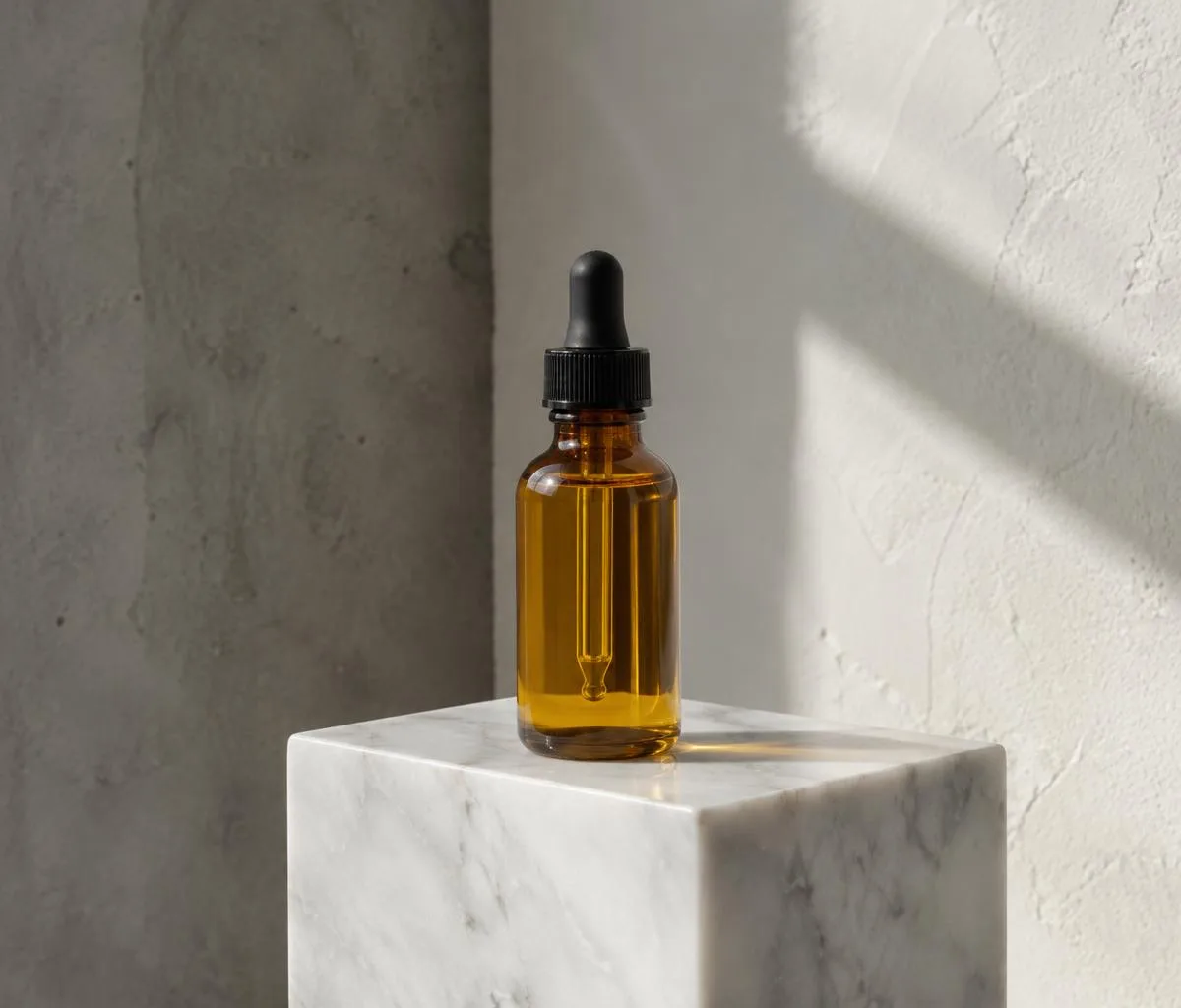
You will understand the solvent action of lipid-based cleansers on oxidized surface sebum and water-resistant films. You will be able to integrate oil-phase cleansing without inducing follicular occlusion.
- Lipid cleansers dissolve stubborn lipophilic impurities through non-polar molecular affinity.
- Emulsifiers within cleansing oils ensure complete rinsing without leaving an occlusive layer.
- Oil cleansing reduces the need for aggressive surfactant stripping on sensitive skin.
Human sebum is a complex lipid mixture synthesized by sebaceous glands and extruded onto the follicular infundibulum. Its standard composition comprises roughly 41% triglycerides, 26% wax monoesters, 16% free fatty acids, 12% squalene, and approximately 5% cholesterol and cholesterol esters. Because this mixture is dominated by non-polar hydrocarbon chains and high molecular weight esters, it exhibits extreme hydrophobicity. Traditional water rinses cannot solvate or displace these molecules due to thermodynamic barriers; the cohesive hydrogen-bonding network of water molecules excludes non-polar hydrocarbons, leaving the lipid film intact on the stratum corneum.
Cleansing oils operate by combining non-polar solvent extraction with surfactant-mediated phase inversion. Rather than relying on mechanical friction or aggressive ionic detergents to denature and strip the skin mantle, these formulations rely on intermediate-polarity carrier lipids to solubilize matching cutaneous lipids. Once the sebum has been dissolved into the applied lipid phase, an integrated emulsifier system permits dilution and removal using standard tap water. Evaluating this mechanism requires examining the physical chemistry of non-polar solvency, interfacial rheology, follicular dynamics, and the variables governing dermal tolerability.
Chemical Solubility Principles of Non-Polar Lipids
The core mechanism of oil cleansing rests on mutual miscibility, governed by the thermodynamic principle that dissolution occurs when the free energy change of mixing is negative. In non-polar systems, entropy favors mixing, provided the enthalpic penalty of intermolecular disruption is low. Sebum lipids, particularly squalene and long-chain wax esters, possess low Hildebrand solubility parameters, typically ranging between 15.5 and 17.5 MPa^(1/2). Liquid carrier oils designed with comparable cohesive energy densities intercalate between the sebum lipid chains, lowering their collective viscosity and detaching them from the keratinized walls of the infundibulum.
Carrier lipids fall into three main functional categories: synthetic hydrocarbons, synthetic branched esters, and natural plant-derived triglycerides. Synthetic hydrocarbons, such as isohexadecane and light mineral oil, exhibit very low polarity, low chemical reactivity, and rapid dispersion across squalene deposits. Branched esters, including ethylhexyl palmitate and isopropyl myristate, feature an ester linkage that imparts a slight dipole, allowing balanced solvency against both pure non-polar squalene and more amphiphilic free fatty acids. Natural triglycerides, such as Helianthus annuus (sunflower) seed oil or Simmondsia chinensis (jojoba) seed oil, mirror physiological lipid structures closely, though their bulkier structures yield higher dynamic viscosity.
| Carrier Lipid Base | Kinematic Viscosity (40 °C, mm²/s) | Relative Polarity | Primary Solvency Target |
|---|---|---|---|
| Isohexadecane | 3.5 to 4.5 | Extremely Low | Squalene, volatile silicones |
| Ethylhexyl Palmitate | 7.0 to 9.0 | Low-Medium | Wax esters, triglycerides |
| Caprylic/Capric Triglyceride | 13.0 to 17.0 | Medium | Free fatty acids, sterols |
| Simmondsia Chinensis Seed Oil | 22.0 to 26.0 | Low-Medium | Oxidized wax esters |
The solvent efficiency of the cleansing vehicle depends directly on its kinematic viscosity. Vehicles with a viscosity below 15 mm²/s disperse rapidly into fine surface micro-relief and the opening of the follicular canal. However, lower viscosity can compromise contact time if the fluid migrates too freely across the face. Formulators often blend low-viscosity esters with structured triglycerides to maintain an operational viscosity between 18 and 35 mPa·s at ambient room temperature, optimizing spreadability and solubilization kinetics.
Emulsification and Water-Rinse Dynamics
A non-polar oil base cannot self-remove with water; attempting to rinse an oil-only application results in oil-phase water repulsion, leaving an occlusive hydrophobic residue. Cleansing oils overcome this by incorporating oil-soluble, non-ionic surfactants that remain inactive within the anhydrous bulk formula, activating only upon contact with exogenous water. The performance of this system depends on selecting surfactants with an appropriate Hydrophilic-Lipophilic Balance (HLB), typically targeting a combined HLB value between 8.5 and 11.5.
When clean water is introduced to the oil-coated skin, the system undergoes phase inversion. The non-ionic surfactants, such as PEG-20 Glyceryl Triisostearate, Polyglyceryl-4 Oleate, or Polysorbate 85, rapidly migrate to the oil-water boundary. The hydrophobic alkyl tails remain anchored in the carrier oil and dissolved sebum, while the hydrophilic polyoxyethylene or polyglycerol heads orient outward into the aquatic phase. With gentle mechanical action, the bulk continuous oil phase breaks down into discrete droplets, transitioning from a water-in-oil dispersion to an oil-in-water microemulsion or fine nanoemulsion.
- Initial Dispersion: Water is mechanically blended into the oil film on the face, creating an unstable, milky macroemulsion with droplet diameters typically exceeding 1.0 micrometer.
- Phase Inversion: Additional water changes the volumetric phase ratio, pushing the surfactant layer past its phase inversion point and locking dissolved sebum inside the droplet cores.
- Hydrodynamic Clearance: The water-continuous emulsion drops its affinity for the hydrophilic stratum corneum, allowing the entire lipid burden to be rinsed away using running water.
Rinsing dynamics rely on water temperature and surfactant diffusion rates. Tap water below 20 °C stiffens high molecular weight triglycerides, increasing interfacial tension and slowing surfactant migration, which leads to incomplete rinsing and cloudy film deposition. Conversely, water between 32 °C and 37 °C lowers interfacial tension and accelerates droplet detachment without reaching temperatures that destabilize the epidermal lipid bilayer.
Impact on Sebaceous Filaments and Follicles
Sebaceous filaments are physiological formations within the follicular infundibulum composed of compact, layered corneocytes, residential microorganisms (principally Cutibacterium acnes), and an amorphous lipid cement dominated by oxidized squalene and wax esters. Unlike closed comedones, which feature an abnormal, hyperkeratinized retention structure completely sealing the pore orifice, sebaceous filaments are open to the surface. Their dark or greyish cast is generally the result of squalene photo-oxidation and light scatter across the follicular aperture rather than trapped melanin.
Because the lipid matrix holds the dry corneocyte flakes inside the filament, introducing a fluid solvent destabilizes the aggregate. The cleansing oil diffuses through the follicular opening via capillary action, dissolving the low-viscosity fraction of the intraglobular sebum. As the oxidized squalene and fluid wax esters dissolve into the carrier oil, the structural cohesion of the filament decreases. Mechanical massage then dislodges the uppermost portion of the keratin-lipid plug, which is subsequently captured inside the emulsion during the water-rinse phase.
This process changes the volume and optical properties of the follicular opening without altering baseline sebaceous gland output. Cleansing oils do not downregulate androgen-mediated sebum production inside the sebocyte cells; they simply clear the pooling area within the canal. Within 48 to 96 hours following extraction, the sebaceous gland continues normal lipid synthesis, refilling the infundibulum. Consequently, oil-based dissolution manages filament visibility, but cannot permanently reduce pore diameter or halt natural lipid flow.
Risk Factors for Comedogenicity and Occlusion
While the goal of cleansing oil is lipid removal, residue can persist if formulation chemistry or rinsing techniques are flawed. The primary variable governing comedogenic risk is the residual fraction: the mass of formulation left on the skin per square centimeter after water clearance. In laboratory settings, an effective formulation leaves less than 0.05 milligrams of lipid per square centimeter post-rinse. If the surfactant concentration is too low (typically under 6% to 8% by weight), phase inversion remains incomplete, leaving carrier lipids and their dissolved sebum deposits on the stratum corneum.
The molecular composition of the carrier oil influences its tendency to induce microcomedones. Unsaturated fatty acids containing unconjugated double bonds, such as oleic acid (common in olive oil and sweet almond oil), can accelerate follicular hyperkeratosis when retained in the infundibulum under ultraviolet light exposure. Squalene oxidation products, specifically squalene monohydroperoxide, trigger comedogenesis and localized inflammatory cascades. In contrast, highly saturated linear structures or specialized synthetic esters show significantly lower comedogenic potential when small amounts fail to rinse away.
Surfactant Residue and Barrier Disruption
Surfactants pose their own risks to barrier integrity. While non-ionic surfactants are milder than anionic varieties like sodium lauryl sulfate, prolonged contact can extract intercellular lipid sheets. Formulations with excessive surfactant loads (above 18% to 20%) or products left unrinsed can disrupt stratum corneum desquamation enzymes, causing localized irritation or secondary follicular occlusion. Individuals with preexisting dermatological conditions, such as perioral dermatitis, rosacea, or active cystic acne, should consult a board-certified dermatologist before incorporating lipid-heavy regimens, as altering surface interfacial chemistry can destabilize reactive vascular and follicular environments.
Protocol for Two-Step Facial Cleansing
To balance sebum dissolution with complete lipid removal, dermatological frameworks frequently apply a structured two-step cleansing protocol. This approach uses an anhydrous cleansing oil to mobilize lipid-soluble compounds, followed by an amphoteric or mild anionic water-based cleanser to lift residual polar particulates and surfactants.
Applying the Oil Phase to Dry Skin
Ensure the facial skin and hands are completely dry. Dispense approximately 2.0 to 2.5 milliliters of cleansing oil into the palms. Smooth the product over the face using circular motions, applying light pressure (roughly 10 to 15 kilopascals) for 45 to 60 seconds. This duration provides enough contact time for the carrier oil to solvate surface sebum and penetrate the upper infundibulum without causing friction irritation. Do not use cloths or abrasive pads during this stage.
Emulsifying with Tepid Water
Wet the palms with 5 to 10 milliliters of tepid water (calibrated between 32 °C and 35 °C). Re-massage the face thoroughly for 15 to 25 seconds. The oil layer must change rapidly into a thin, white, milky liquid. If the film remains translucent or greasy, add a few more drops of water until the phase inversion is visually obvious across the forehead, nose, cheeks, and jawline.
Performing the Initial Rinse
Flush the skin thoroughly with running tepid water for 20 to 30 seconds. Ensure that the water reaches perimeter areas like the hairline, submandibular border, and post-auricular regions. At the conclusion of this rinse, the face should feel slick but not greasy, indicating that the bulk of the oil-sebum microemulsion has washed away.
Secondary Water-Based Surfactant Cleansing
While the skin is still damp, apply a low-foaming, water-based cleanser formulated between pH 5.0 and 5.5, containing mild amphoteric surfactants (such as Cocamidopropyl Betaine or Disodium Cocoamphodiacetate) or non-ionic glucosides. Work the product over the face for 30 to 45 seconds. This step complexes any remaining non-ionic cleansing oil surfactants and strips the fine residual lipid film left behind by the primary phase. Conclude with a final 20-second rinse using tepid water, and gently pat the skin dry with a clean, low-friction fiber towel.
Common Mistakes
Deviations from correct physiological and chemical application parameters can lead to skin irritation or poor cleansing outcomes. The following issues occur frequently:
- Applying Cleanser to Damp Skin: Adding the oil to wet skin triggers premature emulsification. The water creates an immediate interfacial barrier that blocks the carrier oil from making direct contact with the sebum, reducing lipid-solvency rates by more than half.
- Omitting the Emulsification Step: Splashing copious amounts of water directly onto the oil film without working it into an emulsion first bypasses the phase inversion mechanism. The bulk water slides over the hydrophobic layer, leaving heavy lipid residues across the face.
- Using Water at Extreme Temperatures: Water colder than 20 °C solidifies the lipid fraction, preventing phase change. Water hotter than 40 °C induces thermal erythema, strips essential structural ceramides, and can trigger rebound barrier dysfunction.
- Massaging for Too Long: Rubbing cleansing oils into the skin for 5 to 15 minutes, often under the impression that this lifts out core filaments, causes mechanical friction micro-tears, irritates the follicular epithelium, and can trigger irritant contact dermatitis.
Practical Recommendations and Monitoring
When selecting an oil cleanser, check the ingredient list for the balance of carrier oils and emulsifiers. Formulations that place non-ionic surfactants within the first four to six ingredients typically invert and rinse more cleanly than formulations that rely primarily on natural plant oils with trace surfactants added as afterthoughts. Individuals prone to follicular clogging should favor formulations based on isohexadecane, caprylic/capric triglyceride, or squalane, avoiding high concentrations of ethylhexyl palmitate, coconut oil, or high-oleic vegetable oils.
Monitor your skin's response closely over a 14-day introductory period. Normal outcomes include a reduction in visible surface oxidation on the central nose and a clean skin texture free of tight, stripped sensations. If persistent closed comedones, localized micro-cysts, or sustained erythema emerge along the jawline or perimeter zones, discontinue use. These signs suggest incomplete surfactant rinse-off, vehicle-induced occlusion, or an intolerance to the formulation's fragrance or preservative systems. If persistent breakouts or barrier damage occur, consult a medical professional for personalized evaluation and patch testing.
This content is educational and not medical advice; consult a board-certified dermatologist for persistent skin conditions or individualized treatment plans. Disclaimer