 Lavanis
You will evaluate the sanitary risks linked to physical exfoliation tools stored in humid shower enclosures. You will be able to disinfect or replace these accessories before biofilm establishment occurs.
- Porous natural loofahs foster Pseudomonas and other opportunists within twenty-four hours of storage in humidity.
- Friction from coarse tools can generate micro-abrasions in the outer epidermal layer.
- Smooth woven washcloths that are laundered after every single use offer the lowest microbial risk.
Mechanical cleansing accessories such as natural loofahs, boar-bristle brushes, synthetic mesh poufs, and woven cotton washcloths are common fixtures in residential bathrooms. While these tools assist in the removal of sebum, sweat, and environmental soil, their material construction and primary storage locations make them susceptible to microbial contamination. Bathrooms routinely sustain high ambient humidity, elevated temperatures, and limited air circulation. Under these physical parameters, an accessory designed to collect organic debris often functions as an unintended incubation matrix.
When users scrub the skin surface, these tools collect shedding corneocytes (dead skin cells), lipid secretions, and superficial bacteria. If left damp between uses, the trapped biomass feeds microbial populations that colonize the interior matrix of the implement. Reintroducing contaminated cleansing tools to the skin during subsequent washing cycles can alter the resident cutaneous microbiome, induce mechanical micro-trauma, and inoculate potential pathogens into the dermal barrier. Understanding the biology of bathroom biofilms and the physical mechanics of tool-induced friction is essential for maintaining safe hygiene routines.
Biofilm Dynamics in Humid Environments
A biofilm is an organized consortium of microorganisms embedded within a self-produced matrix of extracellular polymeric substances (EPS), consisting of polysaccharides, structural proteins, and extracellular DNA. In home showers, relative humidity frequently exceeds 85 percent, and ambient air temperatures typically hover between 21 and 38 degrees Celsius. These conditions closely match the optimal parameters for bacterial and fungal proliferation.
When an implement remains wet for more than 4 hours, free-floating planktonic bacteria adhere to the moist fibers. Within 8 to 12 hours, these organisms transition into a sessile state, synthesizing the EPS slime layer. Once established, this matrix protects interior bacteria against desiccation, mechanical rinsing with tap water, and mild detergent exposure. Surfactants found in standard commercial body washes disperse superficial organisms but often fail to penetrate the deeper strata of an established biofilm.
Moisture retention varies significantly by tool construction. A tightly wound natural gourd loofah or a dense wooden bristle brush can retain internal moisture for 24 to 48 hours after use, creating an uninterrupted growth window. Conversely, a single-layer cotton washcloth hung flat across a ventilated bar dries in approximately 3 to 6 hours, which curtails bacterial replication cycles more effectively.
| Cleansing Implement | Drying Time (Enclosed Stall) | Drying Time (Ventilated Room) | Biofilm Susceptibility |
|---|---|---|---|
| Natural Loofah Gourd | 28 to 44 hours | 14 to 20 hours | High |
| Boar-Bristle Wooden Brush | 22 to 36 hours | 12 to 16 hours | High |
| Polyethylene Mesh Pouf | 8 to 14 hours | 4 to 6 hours | Moderate |
| Single-Ply Cotton Washcloth | 6 to 10 hours | 2 to 4 hours | Low to Moderate |
Micro-Fissures Caused by Rough Mechanical Scrubbing
The human stratum corneum is the outermost barrier layer of the epidermis, comprising approximately 15 to 20 layers of flattened, lipid-enveloped corneocytes. Its primary function is preventing transepidermal water loss and preventing entry of environmental antigens and microorganisms. The application of high-friction tools disrupts this architectural structure.
Coarse implements, particularly stiff natural bristles and fibrous vegetable skeletons, apply non-uniform shear stress across the epidermal surface. This mechanical load strips the physiological intercellular lipid matrix (composed of ceramides, cholesterol, and free fatty acids) faster than the skin can replenish it. The result is stratum corneum thinning and the formation of sub-clinical micro-fissures, which are minute breaks in the skin envelope that measure between 2 and 15 micrometers in width.
These micro-fissures compromise skin integrity in two ways:
- Barrier disruption: Transepidermal water loss increases rapidly, producing clinically dry, irritable, and erythematous patches within 24 to 72 hours of over-scrubbing.
- Direct pathogen inoculation: The micro-breaks serve as entry portals for microbes residing on the cleansing tool. Organisms bypassed by the physical barrier gain direct access to the deeper, vascularized layers of the epidermis and the hair follicle infundibulum.
Individuals with underlying dermatological conditions such as atopic dermatitis, keratosis pilaris, or skin & nail care face elevated risks. In these populations, baseline barrier repair kinetics are already impaired. The combined effect of physical abrasion and microbial exposure frequently triggers secondary bacterial infections or exacerbates inflammatory flares.
Pathogen Reservoirs in Porous Natural Fibers
Natural loofahs are derived from the fibrous interior of the dried fruit of Luffa aegyptiaca or Luffa acutangula. The internal architecture consists of an intricate, labyrinthine network of cellulose channels. While this porous structure generates rich lather, it also traps moisture, sloughed cellular matter, and soap curd. The tortuous internal geometry shields microbes from light and airflow, creating a persistent reservoir.
Microbiological studies evaluating used bathroom sponges and loofahs have identified diverse microbial communities. Common isolates recovered from these matrices include:
- Pseudomonas aeruginosa: A gram-negative, opportunistic pathogen known to thrive in wet, low-nutrient environments. It produces pyocyanin and elastase, which can degrade epithelial tissue. In shower contexts, it is the primary causative agent of Pseudomonas folliculitis, commonly known as hot-tub folliculitis, which presents as pruritic follicular papules and pustules.
- Staphylococcus aureus: A gram-positive bacterium commonly carried on human skin and anterior nares. When transferred to a fibrous tool containing sebum, it survives and replicates readily. Inoculation through scrub-induced micro-fissures can lead to impetigo, ecthyma, or deeper furunculosis.
- Enterobacter cloacae and Escherichia coli: Coliform bacteria transferred to implements via aerosolization from uncovered toilet flushes or direct contact during perineal cleansing.
- Fungal and mold species: Genera such as Candida, Aspergillus, and Cladosporium colonize the cellulose matrix of gourds and wooden brush bases, releasing spores and mycotoxins that provoke contact dermatitis.
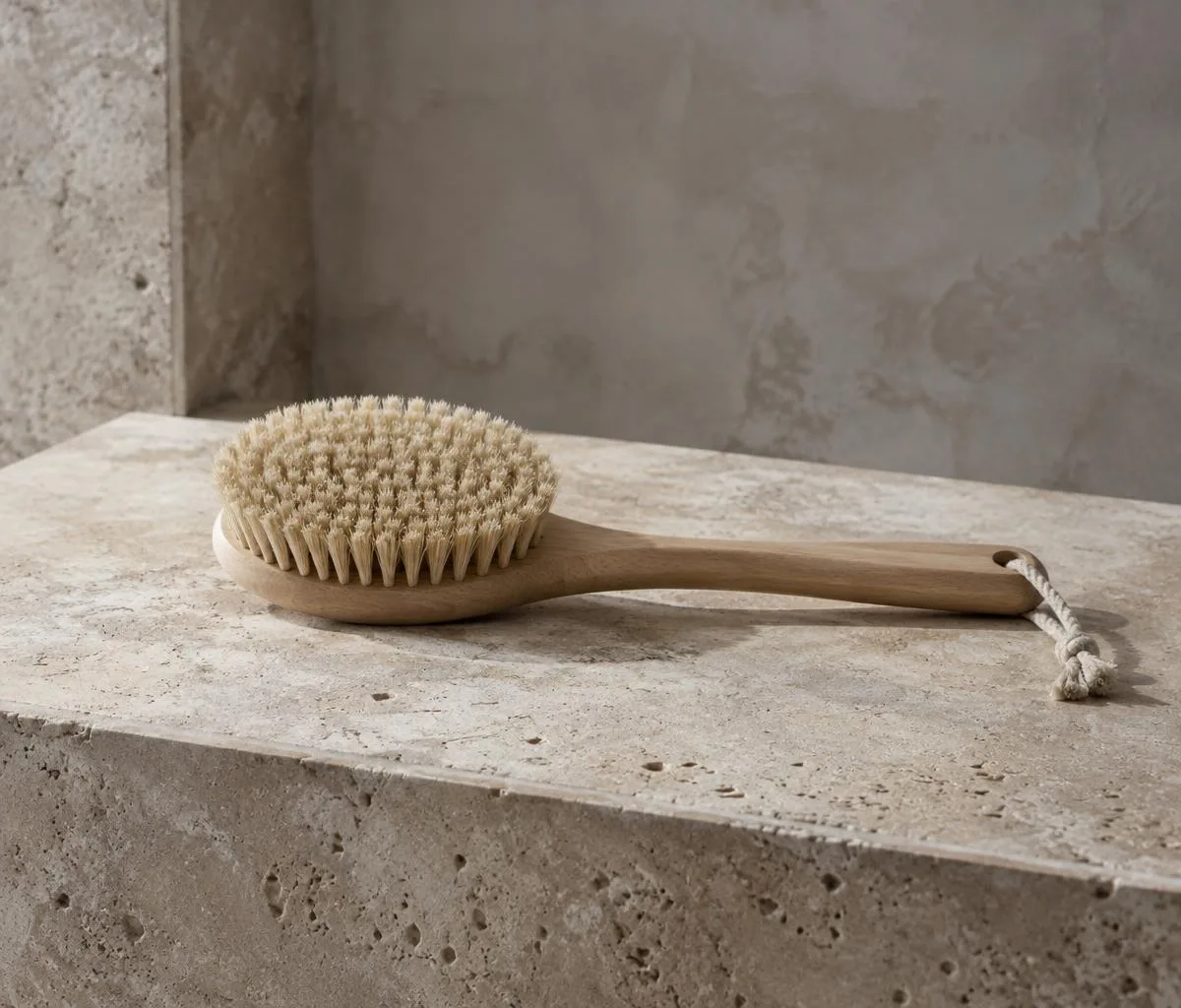
Wood-backed brushes pose a related risk. The interface between the bristle tufts and the wooden base retains water indefinitely if dried upright. The wood swells, develops internal micro-cracks, and fosters fungal colonization that cannot be excised through surface washing.
Sanitization Protocols for Reusable Tools
To interrupt biofilm accumulation, reusable cleansing accessories require systematic chemical or thermal intervention. Simply rinsing an implement under warm shower water does not remove embedded EPS matrices or eradicate settled bacteria. If tools are retained rather than discarded, apply validated decontamination protocols on a fixed schedule.
Thermal Laundering for Cotton Washcloths
Woven textiles present the lowest pathogen persistence risk because they can tolerate high-temperature laundering cycles. To sanitize cotton cloths:
- Designate each cloth for single-use service. Place it in a dry laundry bin immediately after one washing session.
- Launder textiles using a wash cycle configured to a minimum water temperature of 60 degrees Celsius for at least 30 minutes.
- Incorporate standard oxygen-based or chlorine-based laundry agents according to fabric tolerance.
- Tumble dry on high heat (above 65 degrees Celsius) until the fibers are completely dry. Storing slightly damp cloths in closets permits mold propagation.
Chemical Disinfection for Synthetic Poufs and Loofahs
Natural loofahs and plastic mesh poufs degrade rapidly under laundry machine agitation, demanding alternative chemical bath procedures. Perform this decontamination weekly:
- Flush the implement under warm running water to clear remaining soap and visible cellular debris.
- Prepare a dilute sodium hypochlorite solution by mixing 15 milliliters of household bleach (5.25 to 6.0 percent concentration) into 1 liter of cool water. Do not use hot water, which accelerates the decomposition of chlorine compounds.
- Submerge the tool entirely in the bath, ensuring air pockets inside the matrix are evacuated. Allow the implement to soak for exactly 10 minutes.
- Remove the tool and rinse it thoroughly with cool tap water until all chlorine odor dissipates.
- Suspend the implement in a low-humidity, well-ventilated room outside the bathroom enclosure to dry.
If physical degradation appears, including discoloration, fiber thinning, brittle bristles, or a persistent sour or mildew odor, immediately discard the tool. Replace natural loofahs every 3 to 4 weeks, synthetic mesh poufs every 6 to 8 weeks, and bristle brushes every 12 to 16 weeks.
Alternative Friction-Free Body Cleansing
Adequate personal hygiene does not require intense mechanical abrasion. The primary objectives of daily washing are emulsifying skin surface lipids, dispersing water-soluble sweat components, and removing particulate matter. Surfactants accomplish these tasks through chemical action rather than physical scraping.
Surfactant molecules possess a hydrophilic head and a lipophilic tail. When applied to the skin with water, the lipophilic tails bind to cutaneous oils, dirt, and microbial cells, while the hydrophilic heads orient toward the water. Agitation produces micelles, spherical structures that encapsulate the debris. Subsequent rinsing carries these micelles down the drain without needing abrasive force.
To transition to low-friction body cleansing, implement the following approach:
- Dispense liquid cleansers directly: Apply a syndet bar, gentle gel, or lipid-replenishing cleansing oil onto clean, bare hands.
- Emulsify before application: Rub the hands together for 3 to 5 seconds to generate an emulsion before contacting the body.
- Apply light manual pressure: Glide the palms over the cutaneous surface in circular patterns. Use moderate manual pressure only in regions with higher apocrine gland density and sebum production, such as the axillae, groin, and feet.
- Rinse thoroughly: Use lukewarm water (36 to 38 degrees Celsius) to remove surfactant residues. Avoid water temperatures exceeding 40 degrees Celsius, which strip natural ceramides.
- Pat dry: Dry the skin with a clean, laundered towel using light blotting motions rather than vigorous rubbing.
Common Mistakes
Several standard bathroom habits compromise hygiene by supporting microbial reservoirs:
- Storing tools inside the shower stall: Hanging wet tools directly under the showerhead or on an internal wall hook guarantees that drying will be stalled by repeated steam cycles, accelerating bacterial doubling rates.
- Microwaving dry or synthetic tools: While brief microwave exposure can sanitize damp natural cellulose, applying microwave radiation to dry fibers presents a fire risk, and synthetic plastic poufs will melt and release hazardous volatile organic compounds.
- Sharing implements between household members: Using another individual's washcloth or brush facilitates cross-contamination of viral entities (such as human papillomavirus and molluscum contagiosum) and resistant bacterial strains.
- Cleansing open lesions with exfoliating tools: Rubbing skin exhibiting active acne, folliculitis, or eczema lesions disrupts repairing epithelial tissue and inoculates bacteria deeper into surrounding healthy follicles.
Practical Next Steps
Managing the balance between personal hygiene and microbial risk relies on simple, structural adjustments to your home routine:
- Inspect your current bathroom accessories. Immediately discard any tool showing internal black discoloration, soft structural spots, or musty odors.
- Shift to a single-use washcloth model or transition entirely to hands-only surfactant application to reduce bacterial exposure pathways.
- If you continue using reusable tools, install mounting hooks in a dry, ventilated area outside the shower stall to accelerate post-wash evaporation.
- Establish a recurring weekly schedule for chemical sanitization or high-heat machine washing for all retained implements.
- If you notice persistent pustules, spreading redness, worsening itching, or signs of localized skin infection following body scrubbing, discontinue tool use and consult a board-certified dermatologist or primary care physician for a formal clinical evaluation.
This content is educational and not medical advice; consult a board-certified dermatologist for persistent skin conditions or individualized treatment plans. Disclaimer